


Dear visitor,
You're reading 1 of your 3 free news articles this quarter
Register with us for free to get unlimited news, dedicated newsletters, and access to 5 exclusive Premium articles designed to help you stay in the know.
Join the UK's leading credit and lending community in less than 60 seconds.
In conversation with... Helen Boardman
Helen Boardman, Executive Director, Utilita Giving is speaking at Credit Week 2026! Find out more about Helen and what she’s looking forward to at Credit Week below...



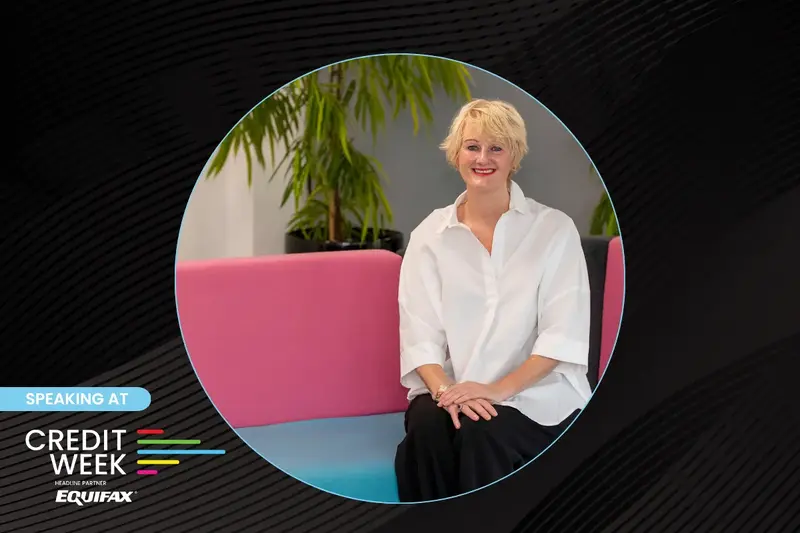
What was your journey to your role today, would you say it’s been a typical career path?
My journey has definitely not been a typical route into financial services or vulnerability strategy. I grew up in and out of the care system and experienced poverty firsthand, so my understanding of vulnerability started long before my career did.
I began working with vulnerable children and young people, particularly children in care, care leavers, young carers, and victims of domestic abuse and sexual violence. Through that work, I saw firsthand how fragmented services could be, with people repeatedly retelling traumatic experiences just to access help.
That inspired me to focus on designing more joined-up, dignity-enhancing systems of support. Over the last 26 years, my career has spanned youth services, health, local government, community partnerships, and the voluntary sector.
Today, as Executive Director of Utilita Giving, I designed and commissioned One Call That’s All (OCTA), a model built around the idea that people should only have to tell their story once. Through OCTA, we’ve now identified more than £1.6 million in potential support for vulnerable households and seen measurable improvements in stress, resilience, and hope.
If you weren’t working in credit and financial services, what would you be doing?
I think I would still be working in systems that support people through adversity and inequality in some way. My motivation has never really been about sector - it has always been about people, dignity, and social justice.
What interests me most is designing services that genuinely improve people’s lives and reduce the barriers they face when asking for help.
Financial resilience sits at the heart of so many wider issues. The latest Joseph Rowntree Foundation research shows that more than 14 million people in the UK are living in poverty, including 4.5 million children. Financial insecurity affects mental health, relationships, housing stability, confidence, and future opportunities.
So although I now work closely with financial services and the energy sector, for me this work is ultimately about helping people move from crisis to stability and hope.
What is something that not many people know about you?
Growing up in and out of the care system, one of the people who had the biggest impact on me was a residential care worker called “Auntie Joan.” She wasn’t actually my auntie, but at eight years old she became one of the first people who truly made me feel safe, valued, and believed in.
She went far beyond her role, comforting me, encouraging me, buying me a teddy bear, and helping me experience warmth and belonging at a time when I desperately needed it.
What stayed with me was not just what she did, but how she made me feel: dignified and worthy of care.
In many ways, capturing the essence of “Auntie Joan” in a system is what I later set out to do with One Call That’s All (OCTA). As AI and technology become more embedded in vulnerability strategy, I think that human feeling matters more than ever.
What is the most significant challenge facing the credit/financial services industry today?
I think one of the biggest challenges is how we identify and respond to vulnerability earlier, before people reach absolute crisis.
Earlier in my career, working in services connected to community safety, I became interested in predictive approaches - using behavioural indicators and data to identify risk and intervene earlier to prevent harm. I now see huge potential for similar thinking to be applied ethically within financial services and vulnerability support.
At Utilita Giving, through OCTA, we use live impact and behavioural data to understand stress, food insecurity, optimism, and financial resilience over time - not just transactional behaviour. We’ve seen beneficiary hope scores rise from 4.8 to 7.7, surpassing the national average, while stress indicators reduce significantly through sustained intervention.
But there’s an important balance to strike. AI and automation can help us identify distress earlier, but vulnerability cannot become purely a data exercise. Human judgement and empathy still matter enormously.
Which session or theme at Credit Week are you most looking forward to, and why?
I’m particularly interested in the conversations around vulnerability, behavioural insight, AI, and ethical customer engagement.
I’m fascinated by how organisations are using data and technology to identify vulnerability earlier and move services from reactive crisis management towards prevention and long-term stability.
At Utilita Giving, through OCTA, we measure things like stress, food insecurity, optimism, and financial resilience over time because we’re interested in whether people are genuinely becoming more stable and hopeful, not simply whether an account has temporarily recovered.
But honestly, one of the things I most enjoyed about last year’s event was the atmosphere around the sessions themselves, the garden party conversations, the marketplace networking, the brilliant coffee, and the unexpected partnerships that grew from those informal moments between panels.
The only slight downside was being introduced to Tony’s Chocolonely by the TransUnion team. I now consider that a very expensive addiction.
What trend or development are you excited about in the credit / financial services sector?
I’m really encouraged by the growing recognition that financial difficulty is rarely just a “collections issue” — it’s often connected to wider social, health, and wellbeing challenges.
What excites me is the move towards more integrated approaches, where organisations are starting to connect vulnerability strategy, customer experience, behavioural insight, and social impact rather than treating them as separate functions.
I’m also encouraged by the growing focus on outcomes rather than just activity. At Utilita Giving, we look at whether people are becoming more resilient and hopeful over time. Alongside crisis intervention, OCTA has identified more than £1.6 million in potential support for vulnerable households, alongside practical interventions including energy vouchers, supermarket vouchers, debt support, and essential household items.
I think the organisations that will lead the future of the sector are the ones that combine innovation with humanity and build trusted relationships with customers.
What do you hope to take away from Credit Week 2026?
For me, events like Credit Week are valuable because they bring together people from different sectors who are all trying to solve similar challenges around vulnerability, trust, customer engagement, and financial resilience.
I’m particularly interested in hearing practical examples of where organisations are genuinely redesigning systems around people’s real lives rather than around organisational silos or processes.
I also value the collaboration that comes from events like this. Some of the partnerships we’re now developing actually began through conversations at Credit Week last year, which is why I enjoy the informal networking spaces just as much as the formal sessions.
I always leave events like this energised by ideas, partnerships, and conversations that challenge my own thinking.
What advice would you give to someone who’s starting their career in the industry?
Stay curious about people, not just systems. It’s important to understand data, regulation, technology, and operational delivery, but the most valuable insight often comes from listening carefully to people’s lived experiences and understanding the reality behind the numbers.
I’d also encourage people not to see vulnerability as a niche specialism. Financial resilience affects every aspect of society, and the decisions made within this industry can have a profound impact on people’s lives and future opportunities.
And finally, never forget that behind every dataset is a human story. Some of the most meaningful innovation isn’t always about creating something flashy - sometimes it’s about simplifying systems, reducing barriers, and helping people feel safe, respected, and able to move forward again.
Helen will be showcasing practical implementations of data-driven approaches that enhance care and compliance for those who are vulnerable. The full agenda can be found here - we hope to see you there!

Stay up-to-date with the latest articles from the Credit Strategy team
READ NEXT

What does the ‘C’ stand for? Britain’s expanding culture of control
In conversation with... Lindsay Gustafsson

In conversation with... Craig Tebbutt



member of


Get the latest industry news
Permission Statement

