


Insights from the FCA: Credit Week’s speaker questions answered
 Kitty Wood
From vulnerability and risk appetite to BNPL and credit data, the FCA responds to key audience questions from Credit Week 2025.
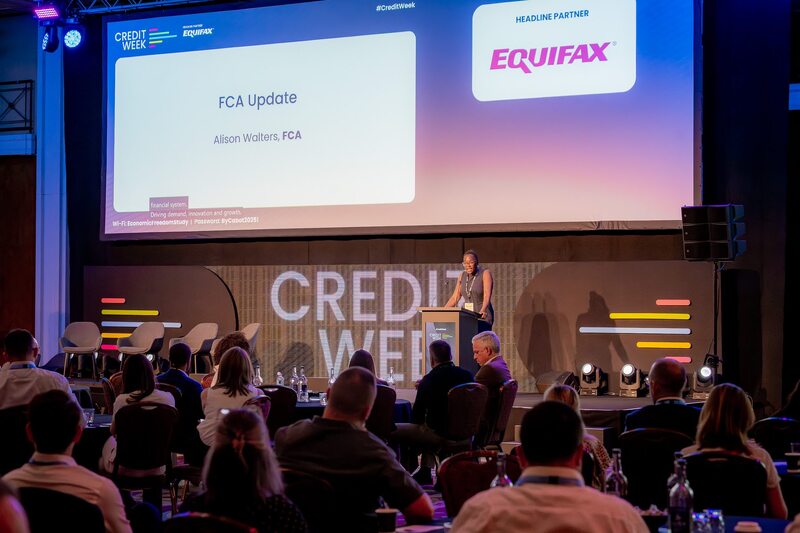
At this year’s Credit Week, Alison Walters, Interim Director of Consumer Finance at the FCA, delivered a keynote address outlining how the FCA’s strategy supports a well-functioning credit market. She also participated in the popular Regulatory Question Time panel.
We’ve got the FCA’s response to your key questions asked during the sessions. Including proactive approaches to identifying vulnerable customers, collaboration between the FCA and FOS and progress on CIMS and BNPL data sharing, here’s what the FCA had to say.
-
What is the FCA doing to improve the identification of vulnerable customers by firms proactively, rather than waiting for a crisis to occur?
FCA: To help achieve good outcomes for consumers, we want firms to be able to identify customers in vulnerable circumstances, understand their needs and be able to respond flexibly to meet those needs.
Under both the Consumer Duty (FG22/5) and our Guidance for firms on the fair treatment of vulnerable customers (FG21/1), we expect firms to support their staff to identify signs of vulnerability and to set up systems and processes that enable customers to disclose their needs.
Our Guidance explains that firms should ensure staff have the skills and capabilities to recognise vulnerability and respond to consumer needs. They should also take steps to encourage disclosure where they see clear indicators of vulnerability but are not expected to go further than this to proactively identify vulnerability.
The Guidance provides examples of signs and phrases staff can actively look out for when engaging with customers (para 3.14). These include changes in payment behaviour, such as unusual activity on an account, and phrases like “I can’t understand the letter you sent me” and other signs such as asking for information to be repeated.
Our review of firms’ treatment of customers in vulnerable circumstances found that taking steps to identify signs of vulnerability and encourage customers to disclose their needs was challenging for most firms – and particularly those with primarily digital customer journeys.
We have previously provided additional information for firms on our expectations under the Duty in identifying customers in vulnerable circumstances, in response to firm queries.
In our report on Delivering good outcomes for customers in vulnerable circumstances published in March, we shared examples of good practice and areas for improvement on identification and disclosure and skills and capability of staff, to support firms. At the same time, we published good practice and areas for improvement on Consumer Support.
We encourage firms to use the information we have shared and consider how they can build on their current practices and do more to support customers in vulnerable circumstances.
Improving outcomes for customers in vulnerable circumstances remains a key part of our ongoing Consumer Duty work with firms across sectors. We continue to engage with industry to support continuous improvement, particularly on areas firms find more challenging, including identifying vulnerability.
-
How are the FCA and the FOS going to deepen their understanding of how to support risk management to move away from their Risk elimination approach which has constrained growth?
FCA: In March we launched our five-year strategy which outlines our priorities to support growth, fight crime, help consumers and become a smarter regulator. To meet these priorities, we recognise that we must focus on rebalancing risk. Regulation should be about enabling informed risk to be taken, not eliminating it entirely. Attempting to do so would stifle innovation and competition, and with them the market dynamism that drives growth and benefits consumers.
As part of this desire to rebalance risk, we are building an approach to consider ’tolerable failure’. This approach is closely aligned with our assessment of risk appetite, which defines the level and type of risk we are willing to pursue in our activities. This seeks to better understand the potential trade-offs between risk, benefits, and harms. The concept of tolerable failure recognises the potential benefits that can arise from taking risks and, therefore, allows us to consider where more risk may lead to benefits exceeding any increased harm. This work has a variety of applications within the FCA, including helping to inform our Policy and CBA approach, as well as acting as a lens to inform our ongoing analysis of the potential harms and growth opportunities within financial markets.
We also continue to work with FOS to strengthen our collaboration. We published our Consultation Paper on Modernising the Redress System in July. This complements a Consultation by the Treasury on potential legislative changes to the redress system. These consultations outline a package of measures including adapting the ’fair and reasonable’ basis on which FOS decides complaints to align it more closely with FCA rules. They also include a referral mechanism for FOS to seek a view from the FCA on issues where there is ambiguity in how FCA rules apply. These measures seek to create more predictability and certainty for firms in the redress system, empowering them to invest and innovate and help them support growth in the UK economy.
-
Is the FCA satisfied with the pace of progress on the CIMS remedies, and that it will ultimately end up being more agile than SCOR?
FCA: The Interim Working Group’s (IWG) work has laid a strong foundation for the next phase in delivering the intended outcomes of the Credit Information Market Study (CIMS). The FCA continues to support the new governance arrangements through the formation of a Credit Reporting Governance Body (CRGB). We see its purpose and objectives as fundamental for the delivery of wider improvements in the credit information sector. We are pleased to see that the transitional arrangements from the IWG are already under way and encourage the industry to continue to support the CRGB’s objectives to deliver good outcomes.
-
What is the FCA’s view on BNPL data sharing across the industry to drive good customer outcomes?
FCA: The FCA recognises that DPC lenders may want to use CRA data or products in their creditworthiness assessments and that there are currently different approaches taken to the reporting of DPC products to CRAs. While we do not currently require lenders to report credit information to CRAs, reporting DPC products to CRAs is important to help drive good customer outcomes across the wider retail lending market. We plan to consult later this year on the proposed remedy set out in the Credit Information Market Study to introduce a mandatory reporting requirement, including how this might apply to the DPC sector.


Stay up-to-date with the latest articles from the Credit Strategy team
READ NEXT

Confidence plunges to lowest since mid-2023 amid global tensions and economic strain

FCA proposes clearer UK crypto regulations

In conversation with... Lindsay Gustafsson



member of


Get the latest industry news
Permission Statement

