


Dear visitor,
You're reading 1 of your 3 free news articles this quarter
Register with us for free to get unlimited news, dedicated newsletters, and access to 5 exclusive Premium articles designed to help you stay in the know.
Join the UK's leading credit and lending community in less than 60 seconds.
How AI is reshaping compliance for UK small businesses
 Credit Strategy, Shard Financial Media
As regulation tightens, UK SMEs are turning to AI to manage compliance, reduce risk and stay resilient amid growing operational complexity.
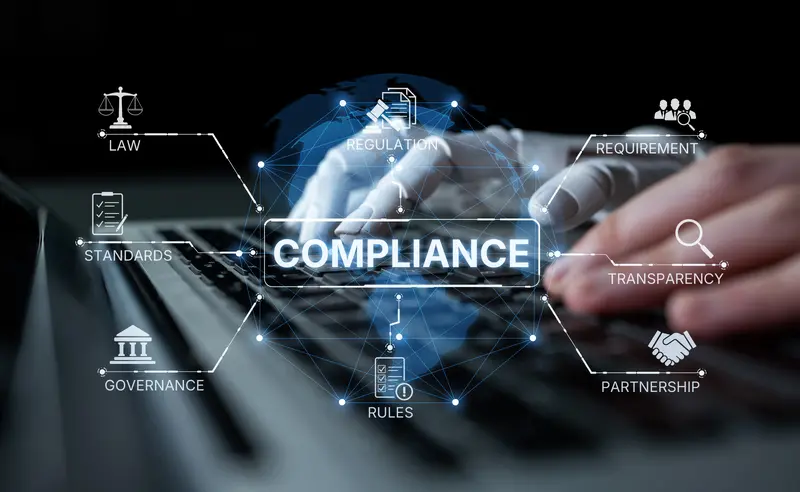
Compliance Pressure Is Rising for UK SMEs
As regulatory scrutiny intensifies and global uncertainty spills into day-to-day operations, compliance has become a defining challenge for UK micro, small and medium-sized enterprises. What was once seen as an administrative burden is now a structural risk that can expose firms to enforcement action, financial penalties and reputational harm.
Industry advisers warn that compliance failures increasingly stem from weaknesses in systems, data and governance rather than simple oversight.
Where Businesses Are Most Exposed
According to advisers working with SMEs, three recurring fault-lines leave organisations vulnerable. Legacy systems and disconnected data prevent a clear, unified view of transactions. Cyber resilience is often underdeveloped, with incidents detected or reported too late. Oversight of third-party suppliers handling identity checks, payments or outsourced services is frequently weak.
In the UK context, these gaps can quickly escalate into breaches of financial crime rules, data protection obligations or consumer-protection standards.
AI as a Practical Tool, Not a Silver Bullet
AI and automation are already changing how compliance work is carried out. Many organisations report significant reductions in manual checks, faster reviews and improved accuracy once AI tools are embedded into transaction monitoring, fraud detection and digital identity processes.
For smaller firms, AI can act as an equaliser. Technologies that once required large compliance teams are increasingly accessible, allowing SMEs to move from limited pilots to real-world deployment.
Data Quality Still Matters
AI is only as effective as the data it relies on. Fragmented systems, unstructured records and inconsistent reporting create blind spots that undermine both compliance and automation.
Advisers stress the importance of integrating financial, operational and regulatory data so controls operate at transaction level, reducing errors that distort reporting and filings. Without this foundation, AI risks amplifying existing weaknesses rather than fixing them.
Making Targeted, Risk-Based Investments
Rather than expensive, wholesale modernisation, experts recommend targeted investment. Retiring the riskiest legacy processes, focusing AI on high-exposure areas, and using “human-in-the-loop” oversight can deliver faster returns.
Clear supplier standards and codes of conduct are also critical, tightening accountability where third parties play a role in compliance-sensitive functions.
Privacy, Transparency and Trust
As AI adoption widens, concerns around privacy, explainability and bias grow more acute. UK firms must align AI systems with data-protection requirements, embedding privacy-by-design, data minimisation and strong audit trails.
Regulators are also paying closer attention to how automated decisions are made, increasing expectations around transparency, bias testing and documented human oversight.
AI and Cross-Border Risk
For SMEs involved in international trade, geopolitical shocks and economic volatility add another layer of complexity. Early-warning systems, risk heat maps and predictive analytics can help businesses anticipate disruption in supply chains, payments or currency exposure.
Combined with AI-driven forecasting, these tools allow firms to shift from reacting to compliance issues after the fact to managing risk proactively.
A Measured Path Forward
The consensus across industry is that AI can deliver real compliance benefits for UK SMEs when paired with disciplined governance. Reduced manual workloads and stronger monitoring are achievable, but only with good data, robust cybersecurity and careful vendor selection.
AI may not remove compliance risk entirely, but for businesses under pressure, it is becoming an essential part of staying compliant, competitive and resilient.
Source: Noah Wire Services
Read more in our Knowledge Hub.


Stay up-to-date with the latest articles from the Credit Strategy team
READ NEXT

The shift from network security to identity security

From testing code to testing risk signals

Bank of England expected to hold interest rate at 3.75%


member of


Get the latest industry news
Permission Statement

